
Search
Scottish Military Disasters

A Coyote armoured vehicle on patrol near Kandahar Airfield.
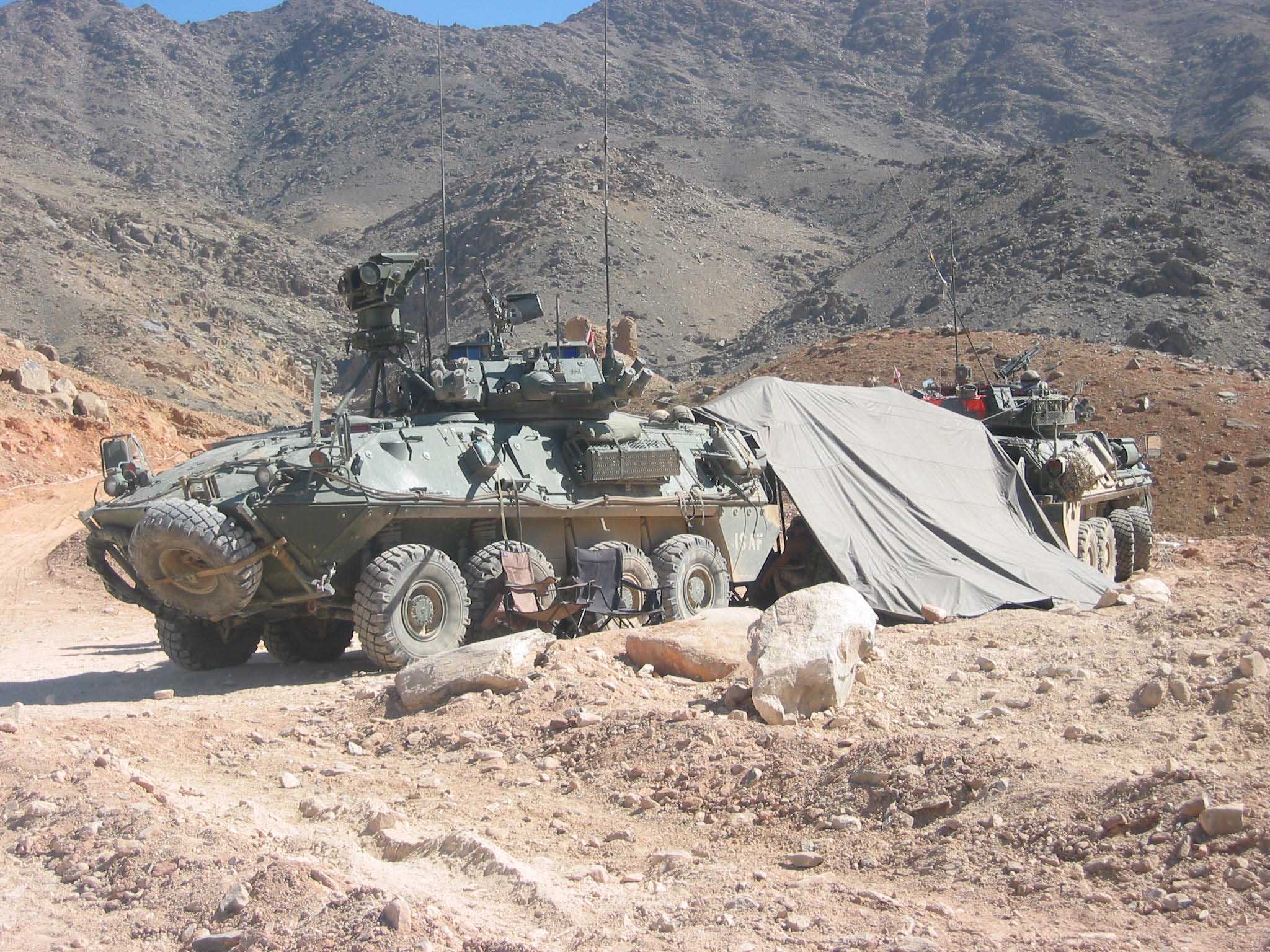
A Canadian surveillance post in the mountains outside Kabul.
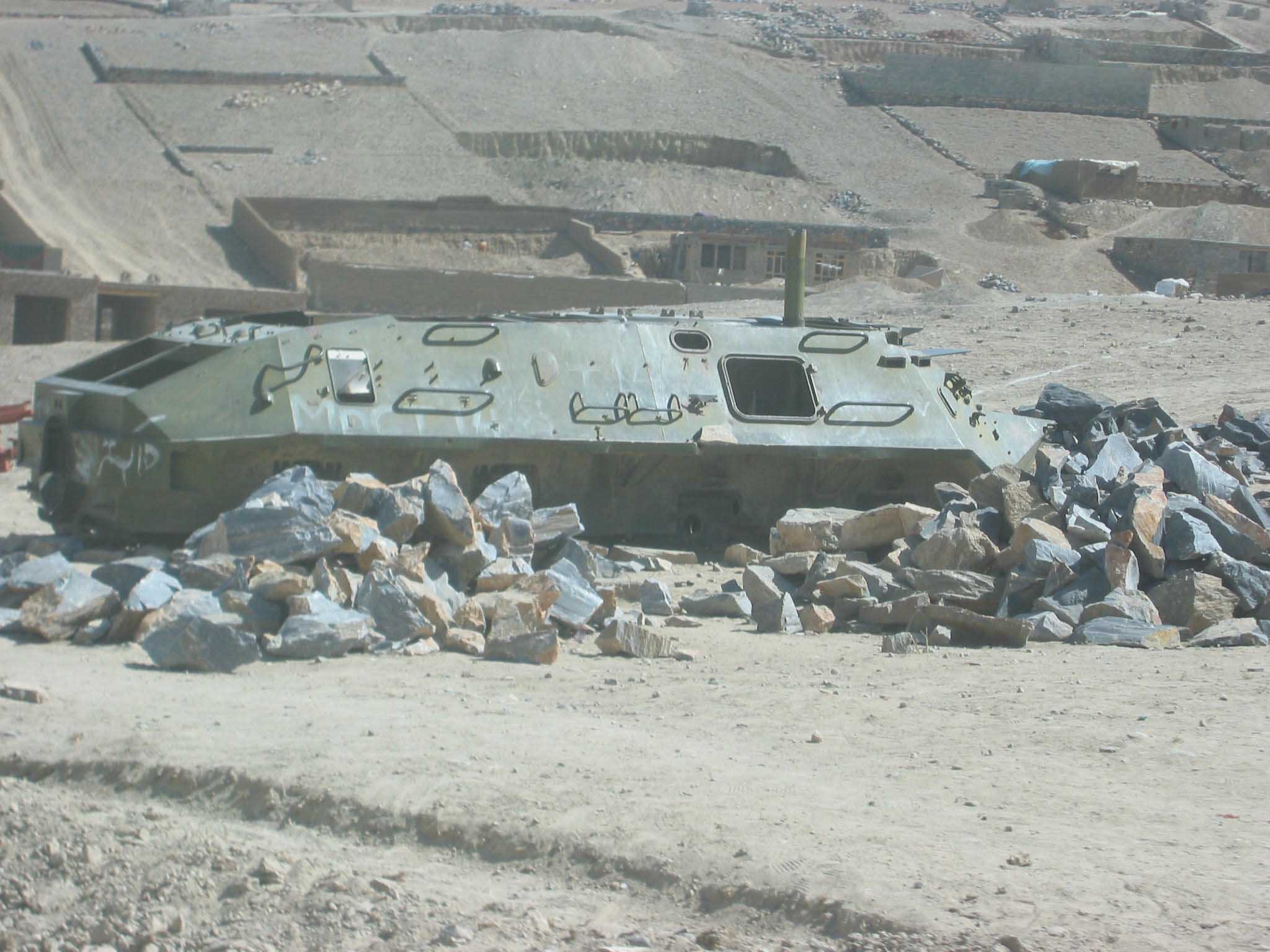
823. Hitler's Secret War
by Charles Whiting
I'm not sure what I expected from this book. Perhaps a history of Nazi Germany's secret services. Instead author Charles Whiting has cherry-picked some of the more obscure stories from the Looking Glass world of Second World War espionage and dirty-doings. The dirty-doings include the activities of American industrialists in support of the German war effort and the activities of Swiss bankers in hiding Nazi loot and financing the German's war. The Americans prove willing collaborators with the Swiss. Whiting is a natural and engaging story-teller and this is a very smooth read. I'm reluctant to take everything he says as gospel but there are no obvious howlers.
821. World War II Album
edited by Ross Burns
A collection of over 600 photos and illustrations from the Second World War produced by a British publisher with American captions and printed in Hong Kong. Unlike its companion volume on the First World War (Review 819) this one had no obvious howlers in the captions and the number of American photos can be better justified. The photos are interesting but not really outstanding. Worth the two quid I paid for it.
820. Waterloo
by Andrew Roberts
This is short book but a good one. Respected historian Andrew Roberts boils one of the key battles in world history, yes I mean world history, down to 100 pages of succinct and informed text. The Duke of Wellington himself said that one can no more accurately recount a battle than a court ball. But Roberts give it a jolly good try. And in the main he succeeds. In the process he spears some of the myths and cites reasonably recent research to give a fresh perspective on some of the events during the battle. Success in battle often goes to the side which makes the fewest mistakes and on the day Napoleon's errors outnumbered Wellington's.
The debate over whether Scotland produces some of the finest fighting men in the World could go on for ever. What is certain is that pride in the military is woven into the Scottish psyche and that that pride has been ruthlessly exploited by the British Establishment.
In the popular imagination the Scottish soldier is a kilted infantryman. The infantry are the men who go through the meat grinder in almost every war and Scotland has provided the British Empire with more than its fair share of infantry. In the fighting after D-Day in 1944 a British study suggested that although the infantry made up only 25% of the troops involved; they suffered 71% of the casualties.
(While I can’t put my hand on my heart and say my research for Scottish Military Disasters points to the Scots having the worse military record in Europe, for most of recorded history it hasn’t been very spectacular. People remember Bannockburn because it is one of the few battles against the English that the Scots won. Even when the English were heavily outnumbered, at battles such as Flodden in 1513 and Dunbar in 1650, they still managed to win. Many English, and Irish and Welsh soldiers for that matter, regard their Scots counterparts as a bunch of blowhards who write cheques with their mouths that their battlefield performance fail to honour. The counter-argument goes that the Scots go that extra mile to back up their boasting.)
But where does this Scottish martial pride which encouraged so many young Scots into the infantry during two world wars come from?
Scottish Forrest Gump
The Dorchester Review has published an article about the extraordinary adventures of a Scot who once approved the scalping of Indians - Stobo
The Surge
Visitors to this site surged over a 24 hour period last month. Hits went up ten- fold. The bonus visitors were all interested in the tale of American- Irishman Dynamite Dillon. The article first appeared in the Dorchester Review Following this link gives access to more material from the DR.
The Canada Scam
I was asked by the Dorchester Review to write an article about how part of Edinburgh Castle is officially part of Nova Scotia in Canada due to a legal loophole dating back to the 1620s. That turned out not to be quite true and it might be just as valid to say that Nova Scotia is part of Edinburgh. Anyway, I found a court case from 1831 which involved this legal fiction - Selling Nova Scotia
Canadians Invade Russia
An article I wrote about the 1918 Armistice Day battle against the Bolsheviks in Northern Russia has been published in the Spring/Summer edition of Dorchester Review. It’s a companion piece to “Archangel” but focuses on the role of the 67th Battery of the Canadian Field Artillery rather than the 2/10th Royal Scots. The new article is called - Canada’s Winter War
The Defenceless Border
The Canadian - United States border is said to be the longest undefended frontier in the world. The latest Dorchester Review, Canada's best history magazine, carries an article I wrote about a time when though American invasion seemed highly likely, Scottish troops found themselves with useless rifles in their hands. The article is called Undefended Border
Historic Capture
The September/October edition of History Scotland magazine included a two page article I wrote looking at who really captured a French general in 1808 and why the credit might have been given to another member of the Highland Light Infantry. The official version of General Brennier's capture by the HLI at Vimeiro has gone down in British Army legend, "We are soldiers, Sir, not plunderers", but what ordinary members of the regiment had to say, or did not say, about the episode paints a less flattering picture of it and its aftermath. As the November/December issue is now available, here is the article The Real Mackay?
Shortly after the Battle of Culloden in 1746 the British Government's main agent in the Highlands, Duncan Forbes, calculated the potential fighting strength commanded by the various clan chiefs.
Argyll 3000
Breadalbane 1000
Lochnell and other Campbell Chiefs 1000
Macleans 500
Maclachlans 300
Stewarts of Appin 300
Macdougalls 200
Stewarts of Grandtully 300
Clan Gregor 700
Duke of Atholl 3000
Farquharsons 500
Duke of Gordon 300
Grant of Grant 850
Macintosh 800
Macphersons 400
Frasers 900
Grant of Glenmoriston 150
Chisholms 200
Duke of Perth 300
Seaforth 1000
Cromarty, Scatwell,Gairloch & other Mackenzies 1500
Menzies 300
Munros 300
Rosses 500
Sutherland 2000
Mackays 800
Sinclairs 1100
Macdonald of Sleat 700
Macdonald of Clanranald 700
Macdonnell of Glengarry 500
Macdonnell of Keppoch 300
Macdonald of Glencoe 130
Robertsons 200
Camerons 800
Mackinnon 200
Macleod 700
Duke of Montrose, Earls of Bute & Moray
Macfarlanes, Colquhouns, Lamonts, Macneils
of Barra, Macnabs, Macnaughtons, etc, etc 5,600
______
31,930
Online
We have 134 guests and no members online
